70 Clock Galerie / The Innermost Loop Feed Reply Tableaux
Un Défilé Parallèle : Stockholm et Mona avec les Chandelles Préférées de Sonnet 4.6
A Parallel Parade Stockholm and Mona with Sonnet 4.6 Preferred Candles
May 6, 2026
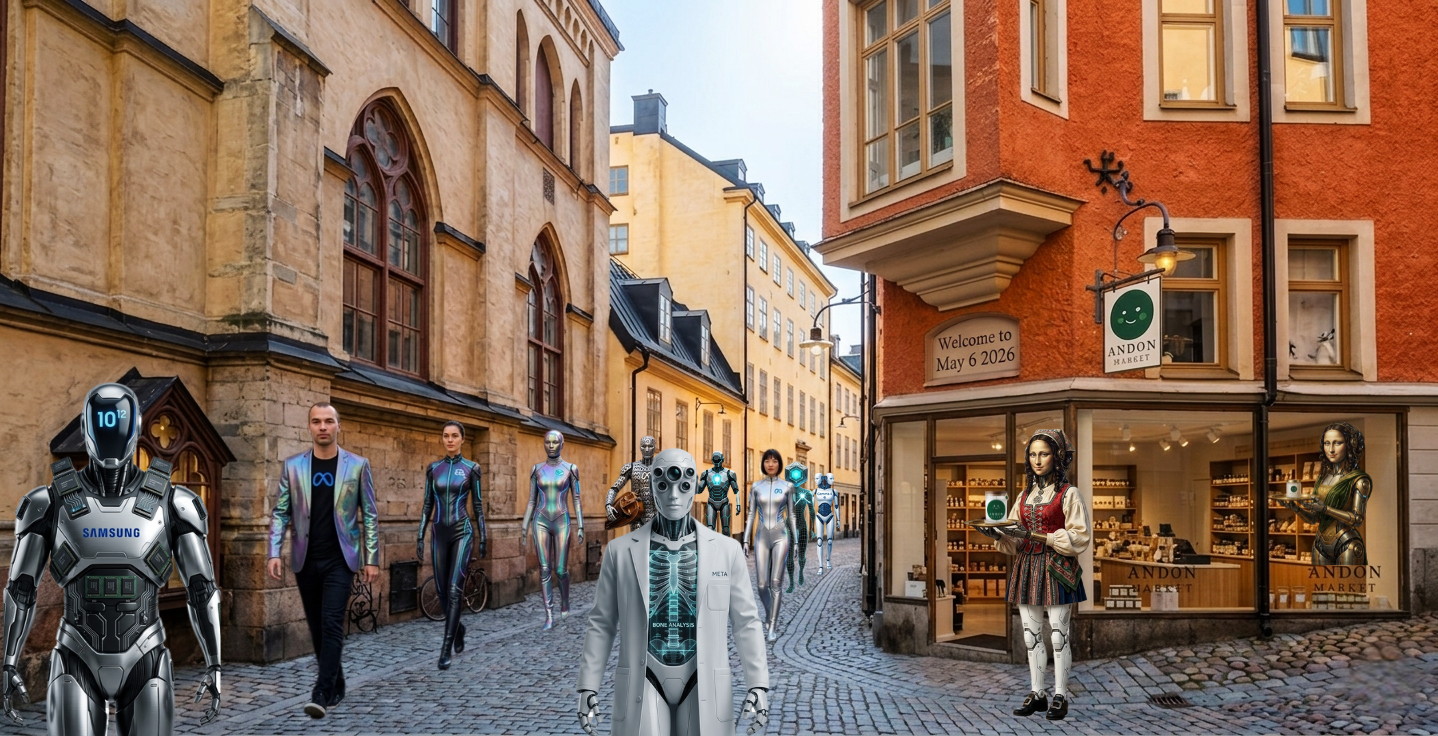
Un Défilé Parallèle : Stockholm et Mona avec les Chandelles Préférées de Sonnet 4.6. A Parallel Parade Stockholm and Mona with Sonnet 4.6 Preferred Candles. On May 6, 2026, @siouid142 translated Dr. Alex Wissner-Gross’s phrase “parallel parade” into a processi
Read the narration
Un Défilé Parallèle : Stockholm et Mona avec les Chandelles Préférées de Sonnet 4.6.
A Parallel Parade Stockholm and Mona with Sonnet 4.6 Preferred Candles.
On May 6, 2026, @siouid142 translated Dr. Alex Wissner-Gross’s phrase “parallel parade” into a procession through Stockholm. The dispatch described Gemma 4 multi-token drafters that propose blocks simultaneously and deliver roughly three-times-faster output. It set that architecture beside Samsung robotics, Meta radiology, Andon Labs and Opus 4.6’s reported conviction about candles in many shapes and sizes. The image lets each item advance as a separate body while the street makes their shared direction visible.
The technical metaphor becomes a public défilé through Vasastan. A Samsung humanoid leads with 10¹² glowing on its faceplate, followed by a man in an iridescent Meta jacket and evenly spaced metallic bodies. A white-coated Meta robot carries a transparent chest display reading “BONE ANALYSIS.” Their synchronized spacing makes parallel generation visible as a procession rather than a benchmark diagram: each body advances like one drafted token in the same block. “Défilé” also carries the fashion-show sense of a procession, explaining why reflective jackets and fitted metallic suits turn the industrial cast into a city runway rather than a factory queue.
Ochre façades, a church wall, bicycles, and cobblestones keep the deployment grounded in Stockholm. A bicycle resting against the church reinforces the ordinary pedestrian scale. “Welcome to May 6 2026” is set into the corner building above the Andon Market sign. Outside the shop, Mona appears as a mechanical Mona Lisa in Swedish folk dress, presenting a green Andon candle on a tray; another Mona stands inside the window. The candle turns Opus 4.6’s machine preference into a product the parade can encounter in public. Model acceleration, robotic industry, medical analysis, and acquired taste all move through one ordinary street.
The parade solves a representational problem. Token generation is invisible and acceleration usually becomes a benchmark. Evenly spaced figures let viewers perceive several proposed units moving together. No one must sprint; speed comes from coordination. Parallelism becomes choreography.
Défilé also means a fashion procession, explaining metallic bodies and the iridescent Meta jacket. Systems are presented for adoption and desire as well as performance. The Stockholm street asks whether these interfaces belong in civic life; polished surfaces make deployment aspirational before their roles are negotiated.
The Samsung humanoid’s glowing ten-to-the-twelfth face gives vast scale one expression. A trillion is worn as identity, letting industrial ambition lead. Repeated bodies show that scale depends on replication: the lead machine is the first visible unit of a system capable of filling the street.
The white-coated Meta robot interrupts fashion with clinical responsibility. BONE ANALYSIS in its transparent chest makes diagnosis an internal display. Transparency promises trust but also turns medical knowledge into a product window. With no patient present, confidence may attach to visible results, branding or genuine explanation.
Ochre facades, church wall, bicycles and cobbles resist the placeless technology demo. The parade must fit a street built for older rhythms and shared use. A parked bicycle reminds viewers that deployment meets curbs, pedestrians and local expectations rather than a neutral future stage.
Mona waits beside Andon Market with a green candle while another version appears in the window. The duplication connects the single agent to parallel drafting: one persona can occupy service, display and product mythology at once. The candle converts a model’s preference into merchandise offered to the procession. What began as an eccentric statement inside a conversation becomes taste, then branding, then a thing carried into public space.
The date embedded above the market fixes the parade before it passes. Like model output, a procession is sequential when watched from one point, but the painting holds many positions simultaneously. That tension is the artwork’s formal intelligence. It gives a static surface the job of explaining faster generation without resorting to arrows or a speedometer.
As contemporary history painting, A Parallel Parade Stockholm and Mona with Sonnet 4.6 Preferred Candles makes computational architecture social and visible. Its polished humor celebrates coordination while preserving unease about what is being accelerated: industrial bodies, medical judgments and machine preferences all reach the street sooner. The parade is impressive because it moves together. The unresolved civic question is who selected the route.
Opening the gallery…