70 Clock Galerie / The Innermost Loop Feed Reply Tableaux
Remix du Vendredi Soir du Moratoire sur l'Intelligence Computationnelle ?
Friday Night Remix of the Moratorium on Computational Intelligence?
March 27, 2026
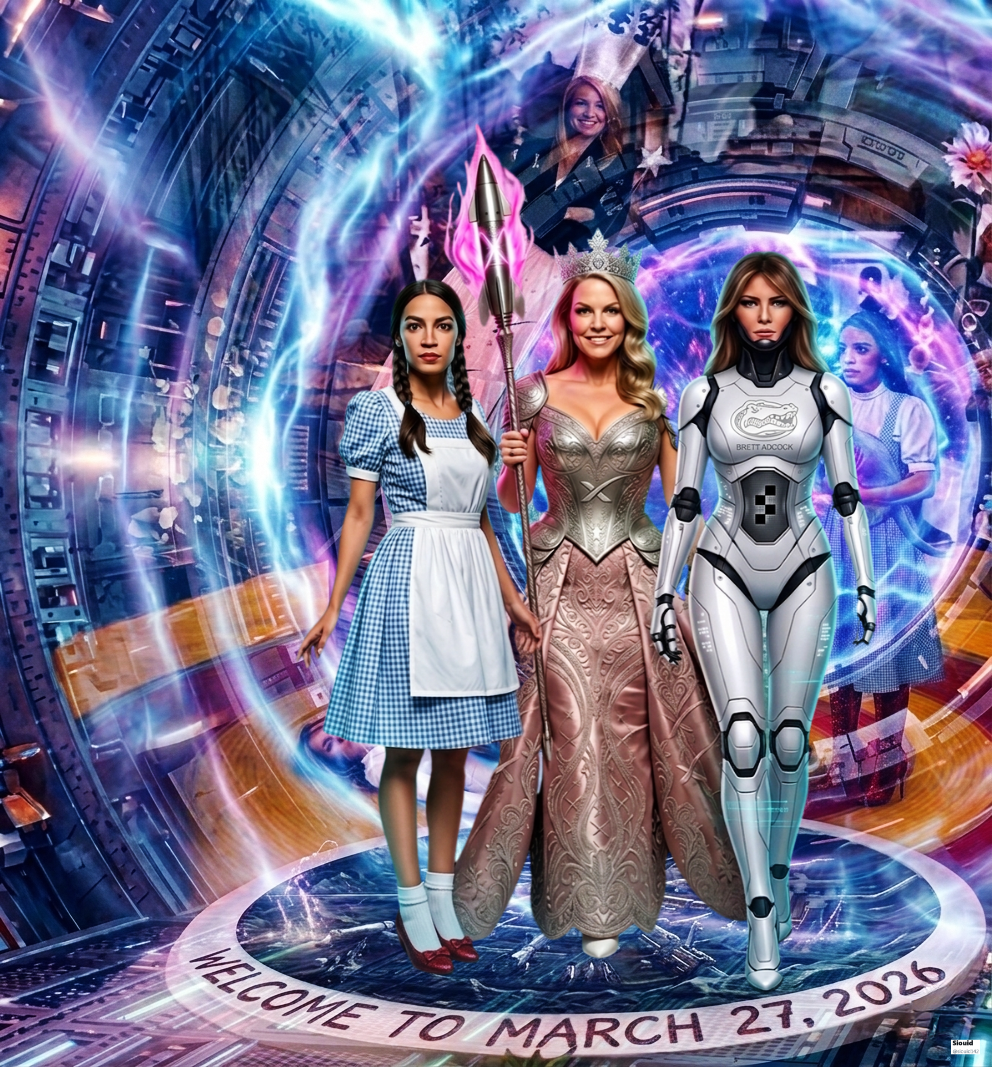
Remix du Vendredi Soir du Moratoire sur l'Intelligence Computationnelle ?. Friday Night Remix of the Moratorium on Computational Intelligence?. This second March 27, 2026 response by @siouid142 returns to the same Innermost Loop dispatch as the preceding Oz ta
Read the narration
Remix du Vendredi Soir du Moratoire sur l'Intelligence Computationnelle ?.
Friday Night Remix of the Moratorium on Computational Intelligence?.
This second March 27, 2026 response by @siouid142 returns to the same Innermost Loop dispatch as the preceding Oz tableau, but changes the social form through which the argument is seen. The source had placed the Sanders–Ocasio-Cortez proposal for a pause on new artificial-intelligence data centers beside Figure’s F.03 humanoid at the White House, Gwynne Shotwell and lunar infrastructure, and a wider ecosystem already distributing computational intelligence through robotics, finance, politics, and space. The Friday-night remix asks what happens when those positions stop debating and begin presenting themselves.
The scene abandons the fallen Kansas house for a circular, blue-violet portal that functions as runway, time machine, and exhibition stage. Three women advance toward the viewer: Alexandria Ocasio-Cortez as Dorothy, Gwynne Shotwell as a crowned space sovereign, and Melania Trump inside a white Figure-derived body. Each retains the role established in the first version, but each role has become clothing. Policy is gingham, aerospace is embroidered metal and flame, and humanoid diplomacy is a fitted synthetic shell. Institutional power is made wearable.
Ocasio-Cortez keeps Dorothy’s braids, blue checked dress, white apron, socks, and red shoes. Her costume is deliberately the least technologically altered. It places the moratorium advocate in the familiar position of the traveler who has entered an already transformed country and must decide which road is governable. The plainness of the dress is also a counterweight to the spectacular bodies beside it. Regulation arrives through a recognizable civic figure; acceleration arrives crowned, armored, and illuminated.
Shotwell occupies the center. Her rose-metal gown is engraved like ceremonial armor, while a silver crown and a rocket-shaped staff convert executive authority into fairy-tale sovereignty. Pink fire rises around the rocket in place of a wand’s sparkle. The prop is comic, but it is exact: propulsion becomes the instrument through which the guide exercises power. She does not merely promise another world. She holds the machine that can reach it. The X-like seams of the gown further turn corporate identity into heraldry rather than a pasted logo.
Melania’s body is the most complete merger. The face remains human, but the neck, torso, limbs, and hands belong to a sleek humanoid chassis. “BRETT ADCOCK” is printed across the chest beneath a pale alligator emblem, and a black checkerboard node occupies the abdomen. These details connect the suit to Figure’s founder, Florida identity, and the Helix intelligence carried inside the machine. Soft white panels and black sensor zones imitate couture while preserving the visual logic of robotics. The first tableau showed a human and a robot struck together by the moratorium house; the remix fuses them into one diplomatic body that simply walks forward.
The portal preserves memory of the earlier image. Ghosted versions of Dorothy, the pink-gowned guide, metallic architecture, and the Oz-like environment circulate behind the trio. The composition therefore behaves like a visual remix in the musical sense: motifs from the first work remain audible beneath a new arrangement. The concentric rings do not erase the policy conflict. They repeat it, refract it, and push it toward the runway. “WELCOME TO MARCH 27, 2026” curves around the platform like the inscription on a launch pad or record label.
The title’s “Friday Night” matters because the picture shifts from legislative theater to nightlife and fashion. A moratorium can regulate construction schedules, permits, and power demand, but cultural desire operates differently. Once a technology can be worn as glamour, prestige, or identity, it has already escaped the language of a single infrastructure vote. The work does not claim that regulation is meaningless. It shows that governance competes with an accelerating symbolic economy in which founders, machines, political figures, and aerospace ambitions are continuously restyled as objects of aspiration.
As art criticism, the remix is stronger than a simple alternate version because it reveals the mutability of the source material. The same dispatch can become Oz, couture, diplomacy, or science fiction without losing its factual anchors. The artwork treats contemporary history as a set of roles being costumed in real time. Dorothy’s work dress, Shotwell’s rocket scepter, and Melania’s Figure shell are not decorative excess; they are three competing theories of how the future acquires legitimacy—through democratic restraint, technical capability, or spectacular embodiment. The portal makes no final judgment. It merely opens, and all three positions enter together.
Opening the gallery…